
Introduction
The Martingale strategy is one of the most controversial approaches in Forex trading. Often promoted as a “guaranteed recovery system,” it attracts both beginners and experienced traders with the promise of eventual profit. But is Martingale really safe in Forex trading, or is it a high-risk trap disguised as a smart strategy?
In this article, we’ll break down how the Martingale strategy works, its advantages, its serious drawbacks, and the real risks traders face when applying it in the Forex market. If you're considering using Martingale, this guide will help you make a more informed decision.
What Is the Martingale Strategy?
The Martingale strategy originates from 18th-century French gambling. The core idea is simple:
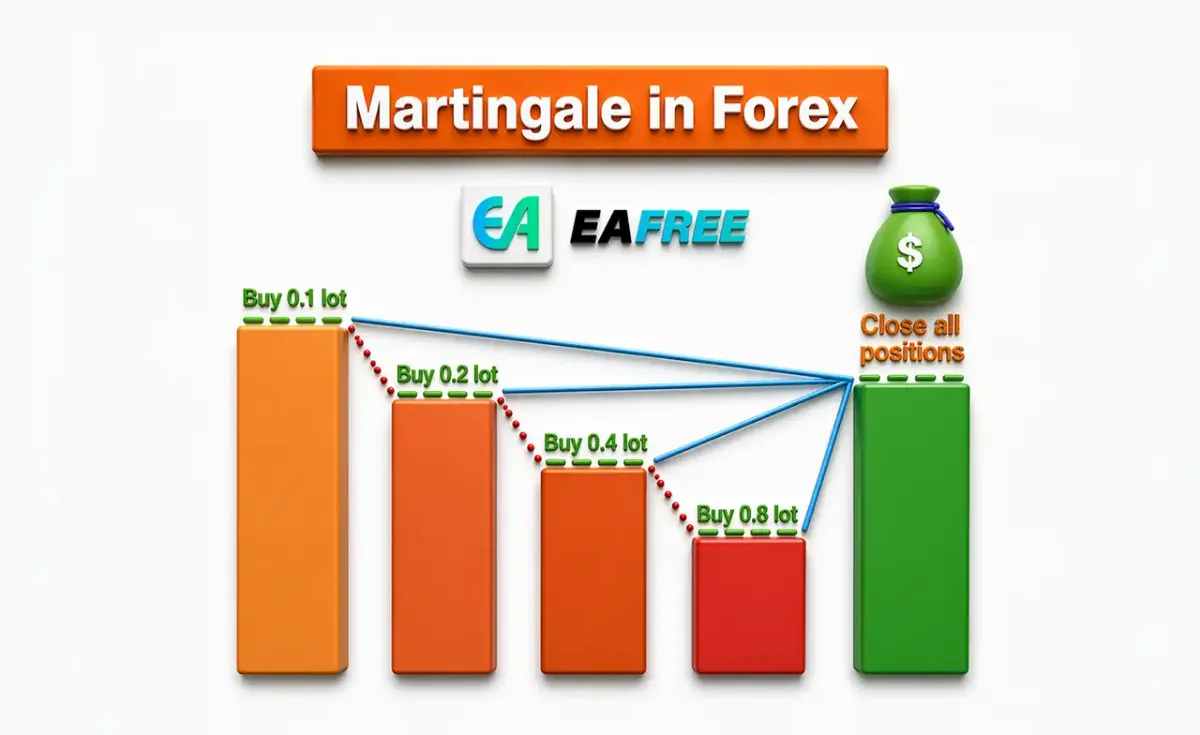
After every losing trade, you double your position size so that when a winning trade eventually occurs, it recovers all previous losses and generates a profit equal to the original stake.
//Example in Forex Trading
Let’s say you start with a $10 trade:
- Trade 1: Lose $10 → Next trade = $20
- Trade 2: Lose $20 → Next trade = $40
- Trade 3: Lose $40 → Next trade = $80
- Trade 4: Win $80 → Net profit = $10
This system assumes that eventually, a winning trade will occur. While mathematically appealing, the real-world application is far more complex.
Why Traders Use Martingale in Forex
Despite its risks, Martingale remains popular for several reasons:
//1. Simple to Understand
The logic is straightforward—double your trade after a loss. This simplicity makes it appealing, especially for beginners.
//2. No Need for High Accuracy
Unlike traditional strategies, Martingale doesn’t require a high win rate. Even a single winning trade can recover multiple losses.
//3. Psychological Comfort
Traders often feel reassured knowing that losses can theoretically be recovered. It reduces the emotional pressure of being wrong.
//4. Works in Ranging Markets
Martingale can perform well in sideways markets where price tends to revert, increasing the chances of recovery trades succeeding.
The Hidden Risks of Martingale
Here’s the uncomfortable truth: Martingale is not safe in Forex trading—especially for undercapitalized traders.
//1. Exponential Risk Growth
Each loss doubles your exposure. After just a few losing trades, your position size becomes dangerously large.
For example:
- After 6 losses → Trade size = 64x original
- After 10 losses → Trade size = 1024x original
Most trading accounts cannot sustain this.
//2. Account Blow-Up Risk
Forex markets can trend strongly for extended periods. If your trades are consistently on the wrong side of the trend, you may hit a margin call before a winning trade occurs.
This is the biggest flaw of Martingale:
It assumes infinite capital and no market limits—neither of which exists in reality.
//3. Broker Limitations
Many brokers impose:
- Maximum lot size limits
- Margin requirements
- Stop-out levels
These constraints can prevent you from continuing the Martingale sequence, locking in losses.
//4. Emotional Stress
Watching your trade sizes grow exponentially can be psychologically overwhelming. Even experienced traders struggle with:
- Fear of losing everything
- Hesitation to continue doubling
- Panic during drawdowns
//5. Low Probability of Long-Term Success
While Martingale may produce small consistent gains initially, it only takes one extended losing streak to wipe out months (or years) of profits.
Pros and Cons of Martingale in Forex
//Pros
- Easy to implement
- Can recover losses quickly (in theory)
- Doesn’t require precise market timing
- Works in low-volatility or ranging conditions
//Cons
- Extremely high risk
- Requires large capital
- Vulnerable to trending markets
- High emotional pressure
- Not sustainable long-term
Is Martingale Ever Safe?
Martingale is rarely “safe,” but there are ways traders attempt to reduce its risks:
//1. Limited Martingale (Capped Levels)
Instead of doubling indefinitely, traders limit the number of steps (e.g., max 3–5 trades). This reduces risk but also eliminates the “guaranteed recovery” feature.
//2. Strong Entry Strategy
Combining Martingale with technical analysis (support/resistance, trend filters) can improve trade accuracy and reduce consecutive losses.
//3. Smaller Initial Lot Size
Starting with very small positions delays exponential growth, giving more room for recovery.
//4. High Capital Accounts
Large accounts can withstand longer losing streaks—but even they are not immune.
Martingale vs Anti-Martingale
An alternative approach is the Anti-Martingale strategy, which does the opposite:
- Increase position size after wins
- Decrease position size after losses
//Why Anti-Martingale Is Safer
- Protects capital during losing streaks
- Maximizes gains during winning streaks
- Aligns with trend-following strategies
Many professional traders prefer Anti-Martingale because it emphasizes risk control rather than recovery.
Real-World Example: When Martingale Fails
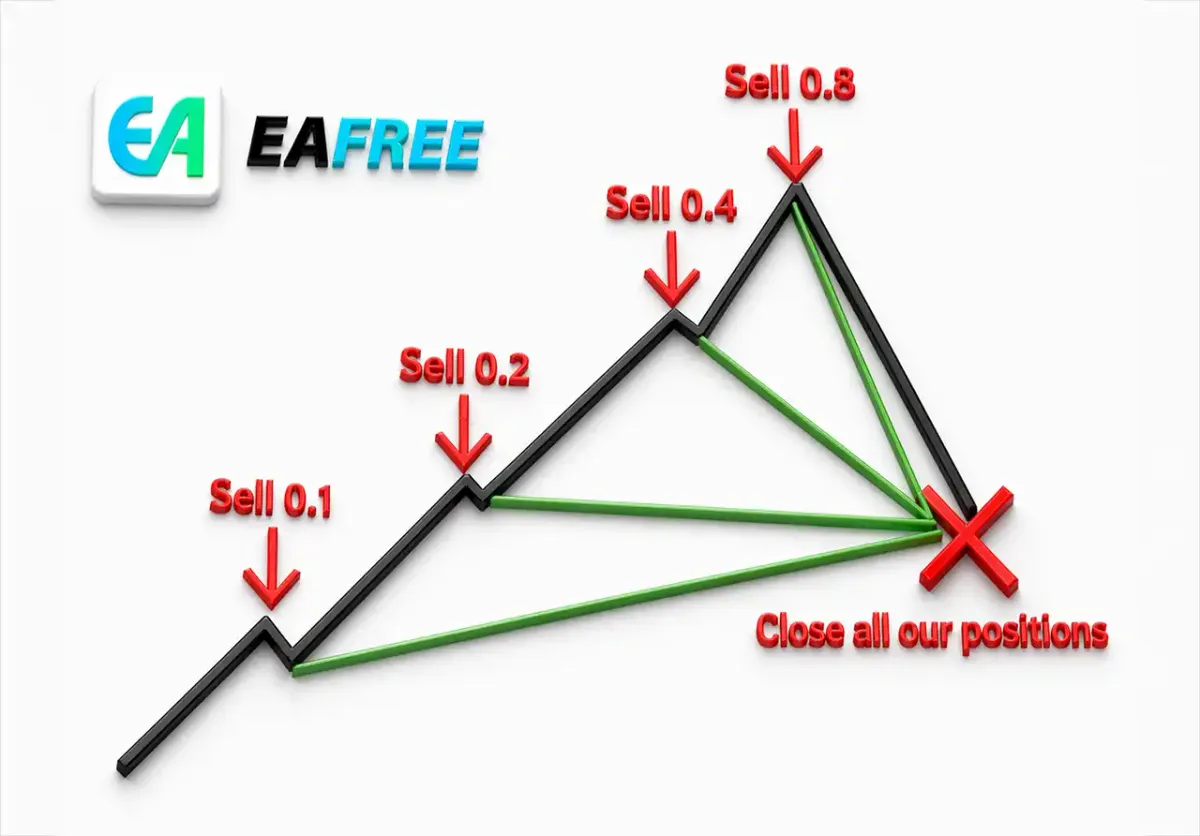
Imagine trading EUR/USD during a strong trend:
- You keep selling in an uptrend
- Price continues rising for 200–300 pips
- You double positions each time
Eventually:
- Margin is exhausted
- Account is liquidated
- No recovery trade ever happens
This scenario is not rare—it happens frequently, especially during major economic events or strong market trends.
Who Should Avoid Martingale?
Martingale is particularly dangerous for:
- Beginner traders
- Traders with small accounts
- Traders without strict risk management
- Those trading during high volatility (news events)
If you fall into any of these categories, it’s best to avoid Martingale entirely.
Safer Alternatives to Martingale
If your goal is consistent growth and capital preservation, consider these strategies instead:
//1. Risk-Based Position Sizing
Only risk 1–2% of your account per trade. This prevents catastrophic losses.
//2. Trend Following
Trade in the direction of the market trend instead of trying to recover losses.
//3. Grid Trading (Modified)
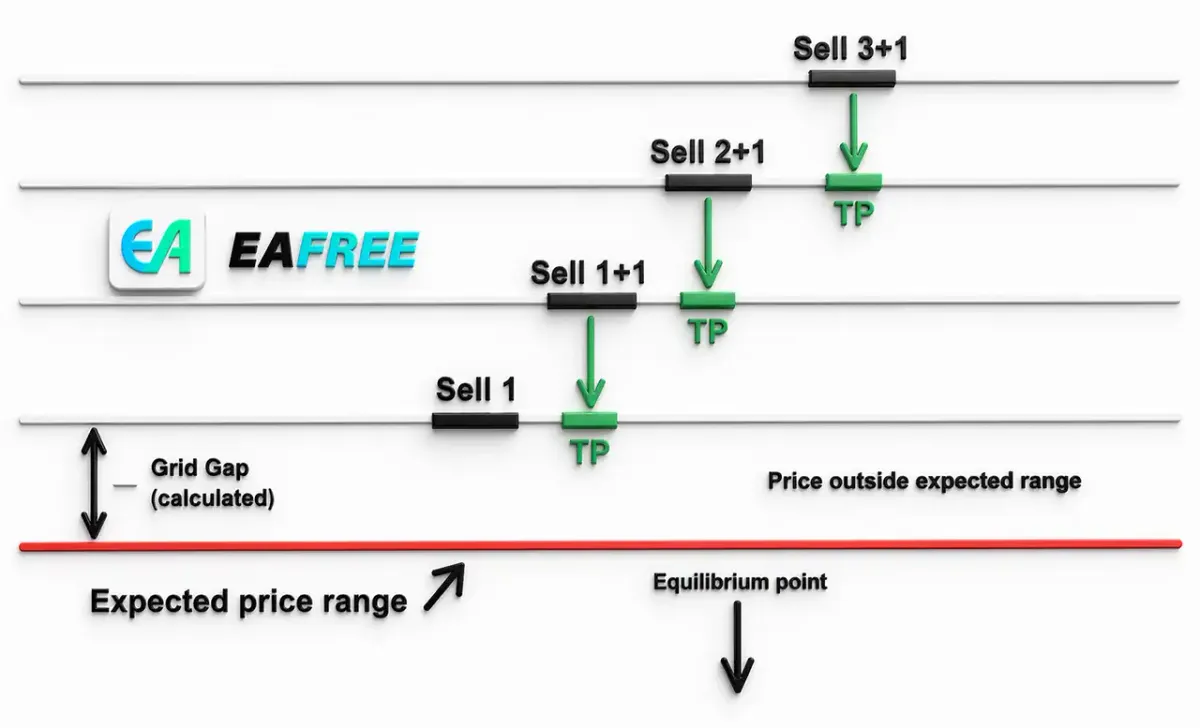
A controlled Grid system with fixed lot sizes (not doubling) can reduce risk.
//4. Stop-Loss Discipline
Always use Stop loss (SL) orders to cap losses early rather than letting them escalate.
Final Verdict: Is Martingale Safe in Forex Trading?
The short answer: No, Martingale is not safe for most Forex traders.
While it may appear effective in the short term, its long-term risk is extremely high. The strategy relies on unrealistic assumptions—unlimited capital and inevitable market reversal—which do not hold true in real trading conditions.
//Key Takeaways:
- Martingale can generate quick recoveries—but at massive risk
- One losing streak can destroy your entire account
- It is not suitable for beginners or small accounts
- Safer alternatives focus on risk management, not recovery
Conclusion
Martingale is a seductive strategy because it promises certainty in an uncertain market. However, Forex trading is inherently unpredictable and no strategy can guarantee profits without risk.
If you value long-term success, discipline, and capital preservation, it’s better to avoid Martingale or use heavily modified versions with strict risk controls.
In trading, survival matters more than quick wins—and Martingale often sacrifices the former for the illusion of the latter.
FAQs
//1. Can Martingale work in Forex?
Yes, but only under specific conditions and usually for a limited time. Eventually, market trends can break the strategy.
//2. How much capital is needed for Martingale?
A large amount—but even then, there’s no guarantee of safety.
//3. Is Martingale used by professional traders?
Rarely. Most professionals prioritize risk management over recovery strategies.
//4. What is the biggest risk of Martingale?
Account blow-up due to exponential position sizing during losing streaks.