
Forex trading offers exciting opportunities for profit, but it also comes with significant risk. Many traders focus heavily on strategies and indicators while overlooking the most critical factor for long-term success: risk management. Without proper risk control, even the most accurate trading system can lead to losses.
This guide will walk you through essential risk management principles in Forex trading, helping you protect your capital and build a sustainable trading approach.
<< 10 Proven Trading Strategy Ideas for Consistent Profits >>
What Is Risk Management in Forex Trading?
Risk management in Forex trading refers to the strategies and techniques used to minimize potential losses while maximizing gains. It involves controlling how much capital you risk on each trade, managing leverage and maintaining emotional discipline.
Unlike predicting the market, risk management is fully within your control. Successful traders don’t aim to win every trade—they aim to protect their capital so they can stay in the game long enough to profit.
Why Risk Management Is Crucial
Many beginner traders fail not because their strategy is poor, but because they neglect risk management. Here’s why it matters:
- Protects your trading capital.
- Reduces emotional stress.
- Ensures long-term survival in the market.
- Prevents catastrophic losses.
Even professional traders experience losing streaks. The difference is that they manage losses effectively, keeping them small and manageable.
The 1%–2% Rule: Risk Per Trade
One of the most widely accepted principles in Forex trading is the 1%–2% rule. This means you should never risk more than 1–2% of your trading account on a single trade.
//Example:
If your account balance is $1,000:
- Risking 1% = $10 per trade
- Risking 2% = $20 per trade
This approach ensures that even a series of losses won’t wipe out your account.
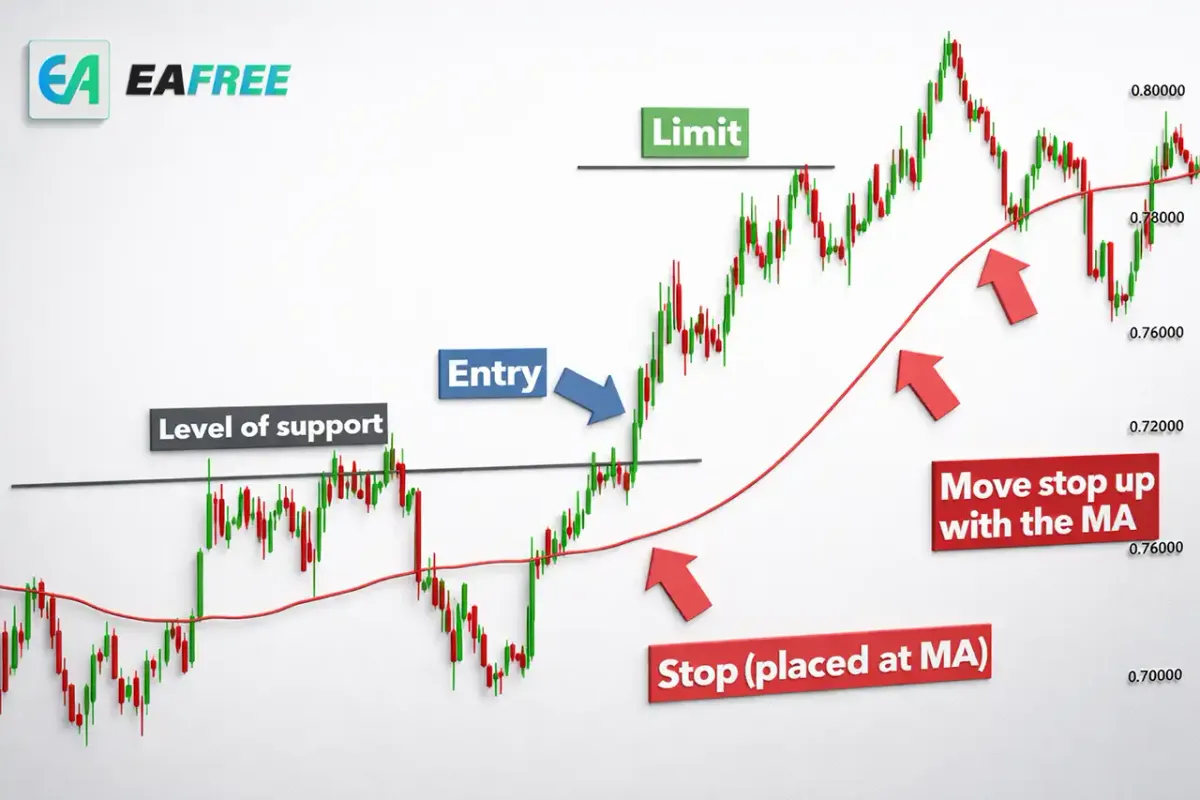
Setting Stop-Loss Orders
A stop-loss order is a predefined price level where your trade automatically closes to limit losses.
//Why Stop-Loss Is Essential:
- Prevents large unexpected losses.
- Removes emotional decision-making.
- Helps maintain discipline.
//Types of Stop-Loss:
- Fixed stop-loss: Set at a specific price level.
- Trailing stop-loss: Moves with the market to lock in profits.
A good stop-loss placement should be based on market structure, not random distances.
Risk-to-Reward Ratio
The risk-to-reward ratio measures how much you risk compared to how much you expect to gain.
//Example:
- Risk: $10
- Reward: $30
- Ratio: 1:3
A positive risk-to-reward ratio allows you to be profitable even if you win fewer trades.
//Ideal Ratio:
- Minimum: 1:2
- Preferred: 1:3 or higher
This means your winning trades outweigh your losing ones.
Position Sizing
Position sizing determines how many lots or units you trade based on your risk level.
//Key Factors:
- Account balance.
- Risk percentage.
- Stop-loss distance.
Proper position sizing ensures that every trade aligns with your risk management plan.
Leverage: A Double-Edged Sword
Leverage allows you to control larger positions with a smaller amount of capital. While it can increase profits, it also amplifies losses.
//Example:
With 1:100 leverage:
- $1,000 controls $100,000 in the market
//Risks of High Leverage:
- Rapid account depletion.
- Increased emotional pressure.
- Overtrading.
//Best Practice:
Use lower leverage (e.g., 1:10 or 1:20) to maintain control and reduce risk.
Diversification in Forex Trading
Diversification involves spreading your risk across different currency pairs instead of focusing on a single trade.
//Benefits:
- Reduces overall risk exposure.
- Protects against sudden market movements.
- Improves portfolio stability.
However, avoid over-diversifying or trading correlated pairs (e.g., EUR/USD and GBP/USD), as they often move in similar directions.
Managing Trading Psychology
Risk management is not just technical—it’s also psychological.
//Common Emotional Mistakes:
- Revenge trading after losses.
- Overconfidence after wins.
- Fear of missing out (FOMO).
//How to Stay Disciplined:
- Stick to your trading plan.
- Accept losses as part of trading.
- Avoid impulsive decisions.
Emotional control is what separates consistent traders from gamblers.
The Importance of a Trading Plan
A solid trading plan is your blueprint for managing risk.
//What to Include:
- Entry and exit rules.
- Risk per trade.
- Stop-loss and take-profit levels.
- Trading schedule.
Following a plan reduces uncertainty and keeps your decisions objective.
Avoiding Overtrading
Overtrading occurs when you open too many trades or trade too frequently.
//Why It’s Dangerous:
- Increases exposure to risk.
- Leads to emotional fatigue.
- Reduces trade quality.
//Solution:
Focus on quality over quantity. Wait for high-probability setups instead of forcing trades.
Using Risk Management Tools
Modern trading platforms provide tools to help manage risk effectively:
- Stop-loss and take-profit orders.
- Risk calculators.
- Margin level indicators.
Using these tools consistently can significantly improve your trading performance.
Drawdown Control
Drawdown refers to the reduction of your trading account from its peak.
//Example:
- Account grows to $1,200
- Drops to $1,000
- Drawdown = 16.7%
//Why It Matters:
Large drawdowns require bigger gains to recover. For example:
- 50% loss requires 100% gain to recover
//Best Practice:
Keep drawdowns below 20% to maintain account stability.
Risk Management Strategies for Beginners
If you’re new to Forex trading, follow these simple rules:
- Risk only 1% per trade
- Always use a stop-loss
- Avoid high leverage
- Stick to a trading plan
- Track your trades in a journal
Consistency in these basics can make a huge difference over time.
Advanced Risk Management Techniques
For more experienced traders, consider:
- Scaling in and out of positions.
- Hedging strategies.
- Using multiple timeframes.
- Dynamic position sizing.
These techniques can optimize performance while maintaining controlled risk.
Common Risk Management Mistakes
Avoid these pitfalls:
- Trading without a stop-loss.
- Risking too much on a single trade.
- Ignoring market volatility.
- Overleveraging.
- Letting emotions dictate decisions.
Recognizing these mistakes early can save your account.
Building Long-Term Consistency
The goal of risk management is not just to avoid losses—it’s to achieve consistent growth over time.
//Key Principles:
- Protect capital first.
- Focus on probabilities, not certainties.
- Stay disciplined under all market conditions.
Successful traders think in terms of long-term outcomes, not short-term wins.
Conclusion
Risk management is the foundation of successful Forex trading. While strategies and indicators are important, they are meaningless without proper control of risk.
By applying principles such as the 1% rule, using stop-loss orders, managing leverage, and maintaining discipline, you can significantly improve your chances of long-term success.
Remember: in Forex trading, survival comes first—profits come second. Protect your capital and the opportunities will follow.