

Trading in financial markets can be both exciting and intimidating. While many beginners enter the market hoping for quick gains, consistent profitability requires discipline, strategy and a deep understanding of market behavior. The good news? You don’t need to reinvent the wheel. Many proven trading strategies have stood the test of time and can help you build a sustainable approach to trading.
In this article, we’ll explore 10 proven trading strategy ideas that can help you achieve more consistent profits, whether you're trading stocks, forex or cryptocurrencies.
1. Trend Following Strategy
The trend is your friend—this classic phrase exists for a reason. Trend following involves identifying the overall direction of the market and trading in that direction.
//How it works:
- Use indicators like Moving Averages (MA) or the Average Directional Index (ADX).
- Enter trades in the direction of the trend.
- Exit when the trend shows signs of reversal.
//Why it works:
Markets tend to move in trends due to sustained buying or selling pressure. Riding these trends can yield significant profits over time.

2. Breakout Trading Strategy
Breakout trading focuses on entering the market when the price breaks through a key level of support or resistance.
//Key elements:
- Identify consolidation zones.
- Wait for a strong breakout with volume confirmation.
- Enter early in the breakout phase.
//Tip:
False breakouts are common, so combining this strategy with volume analysis or confirmation indicators is essential.

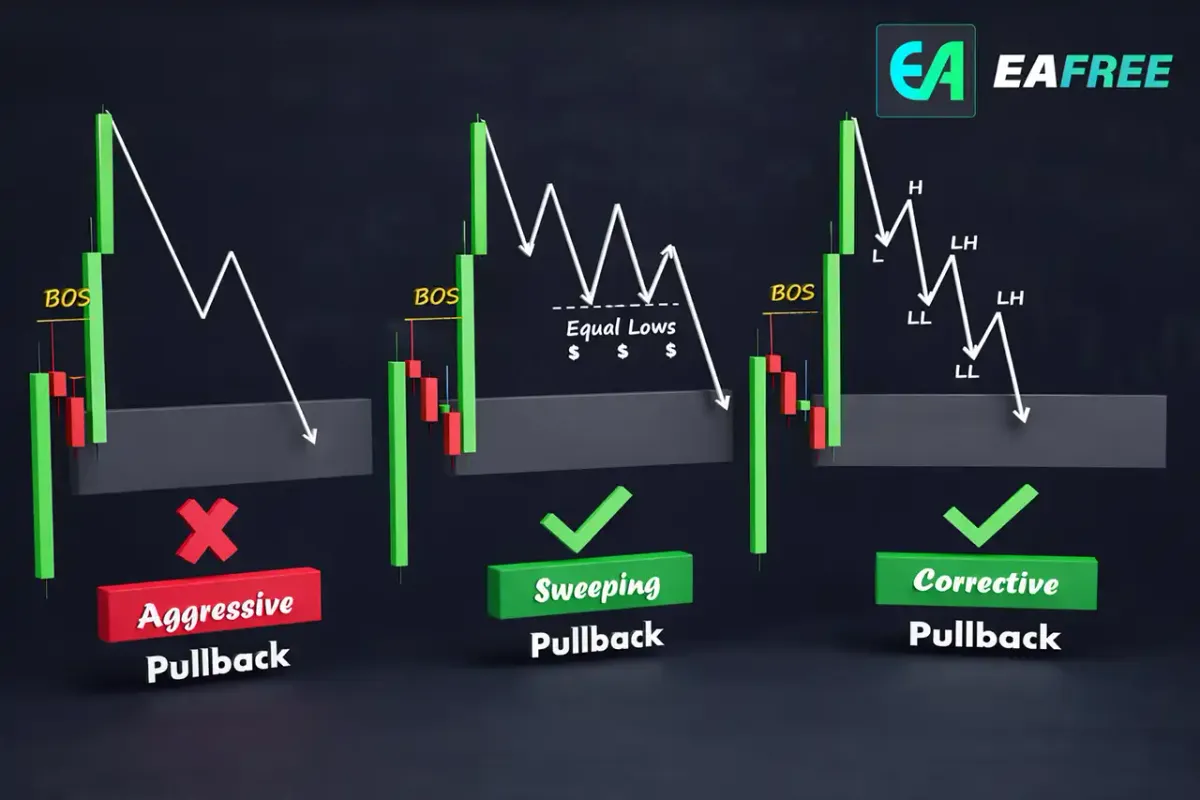
3. Pullback (Retracement) Strategy
Instead of chasing trends, this strategy waits for temporary reversals within a trend.
//Steps:
- Identify a strong trend.
- Wait for a pullback to a support/resistance level.
- Enter when the trend resumes.
//Benefits:
You get better entry prices and reduced risk compared to entering at the peak of a move.
4. Scalping Strategy
Scalping involves making dozens or even hundreds of trades per day, aiming for small profits per trade.
//Characteristics:
- Very short timeframes (1–5 minutes).
- High trade frequency.
- Tight stop-loss and take-profit levels.
//Best for:
Traders who can stay focused and react quickly to market movements.
5. Swing Trading Strategy
Swing trading captures medium-term price movements over days or weeks.
//Approach:
- Use technical indicators like RSI or MACD.
- Identify overbought and oversold conditions.
- Enter trades at turning points.
//Advantage:
Less stressful than day trading and allows more time for analysis.
6. Range Trading Strategy
In a sideways market, prices tend to move between support and resistance levels.
//How to trade:
- Buy near support.
- Sell near resistance.
- Use oscillators like RSI to confirm signals.
//Risk:
Breakouts can occur unexpectedly, so always use stop-loss orders.
7. Momentum Trading Strategy
Momentum trading involves buying assets that are moving strongly in one direction with high volume.
//Indicators:
- Relative Strength Index (RSI)
- Moving Average Convergence Divergence (MACD)
- Volume spikes
//Why it works:
Strong momentum often attracts more traders, pushing prices further in the same direction.
8. News Trading Strategy
Major economic announcements and news events can cause sharp market movements.
//Examples:
- Interest rate decisions.
- Employment reports.
- Company earnings releases.
//Important note:
Volatility can be extreme, so risk management is crucial when trading news.
9. Mean Reversion Strategy
This strategy is based on the idea that prices tend to return to their average over time.
//Tools:
- Bollinger Bands
- Moving averages
- Statistical indicators
//Strategy:
- Sell when price is far above the average.
- Buy when price is far below the average.
10. Algorithmic Trading Strategy
Algorithmic trading uses automated systems to execute trades based on predefined rules.
//Benefits:
- Eliminates emotional decision-making.
- Faster execution.
- Backtesting capabilities.
//Requirements:
- Programming knowledge or trading platforms that support automation.
- Strong strategy development and testing.
Risk Management: The Key to Consistency
No matter how effective a strategy is, poor risk management can wipe out your profits.
//Essential rules:
- Never risk more than 1–2% of your capital per trade.
- Always use stop-loss orders.
- Diversify your trades.
- Avoid overtrading.
Consistency in trading doesn’t come from winning every trade—it comes from managing losses effectively while letting winners run.
Final Thoughts
There is no “perfect” trading strategy that works all the time. The key is to find a strategy that fits your personality, risk tolerance and schedule. Many successful traders combine multiple strategies and adapt them to changing market conditions.
Start simple, test your strategies thoroughly, and focus on long-term consistency rather than short-term gains. With patience, discipline, and continuous learning, you can turn trading into a profitable endeavor.
FAQs
//1. What is the best trading strategy for beginners?
Trend following and swing trading are generally easier for beginners due to their simplicity and lower time pressure.
//2. Can I use multiple strategies at once?
Yes, many traders combine strategies to diversify their approach and reduce risk.
//3. How long does it take to become profitable?
It varies, but most traders take months or even years to become consistently profitable.
//4. Is trading risky?
Yes, all trading involves risk. Proper risk management is essential to long-term success.
By applying these 10 proven trading strategies and maintaining strict discipline, you can significantly improve your chances of achieving consistent profits in the market.