
Introduction
Trading in financial markets can feel overwhelming when you're just starting out. With so many strategies, indicators, and opinions available, beginners often struggle to find a clear path forward. The good news is that successful trading doesn’t require overly complex systems. In fact, some of the most effective strategies are simple, structured, and easy to follow.
In this guide, we’ll break down a beginner-friendly trading strategy that is both practical and proven. You’ll learn how to approach the market with confidence, manage risk and build a solid foundation for long-term success.
<< 10 Proven Trading Strategy Ideas for Consistent Profits >>
Why Beginners Need a Simple Trading Strategy
One of the most common mistakes new traders make is overcomplicating their approach. They jump from one strategy to another, chasing quick profits without truly understanding the basics.
A simple trading strategy helps you:
- Stay consistent in decision-making
- Reduce emotional trading
- Build confidence over time
- Focus on risk management
- Avoid unnecessary confusion
Remember, trading is not about being right all the time—it’s about managing risk and making disciplined decisions.
Core Principles of a Good Trading Strategy
Before diving into the strategy itself, it's important to understand the key principles that make any trading system effective:
//1. Clarity
A good strategy should have clear entry and exit rules. If you hesitate or feel confused, the strategy is likely too complex.
//2. Consistency
You should be able to apply the strategy repeatedly across different market conditions.
//3. Risk Management
Protecting your capital is more important than making profits. Always define how much you are willing to lose per trade.
//4. Simplicity
The fewer indicators and rules, the better—especially for beginners.
The Best Simple Trading Strategy for Beginners
Let’s explore a straightforward and effective strategy based on trend following and support/resistance levels.
//Strategy Overview
This strategy combines:
- Trend identification
- Key support and resistance zones
- Basic price action confirmation
It works well across various markets, including stocks, forex, and crypto.
Step 1: Identify the Trend
The first step is to determine the direction of the market.
//How to Identify a Trend:
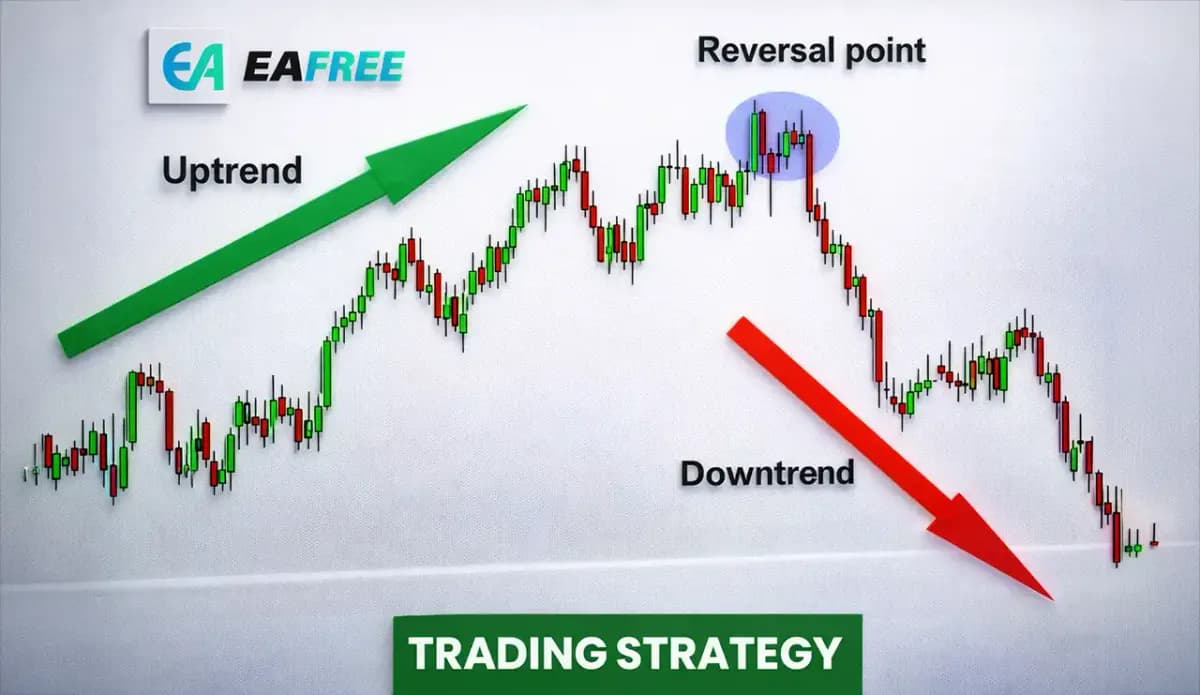
- Uptrend: Higher highs and higher lows
- Downtrend: Lower highs and lower lows
- Sideways: Price moves within a range
You can also use a simple moving average (like the 50-period MA):
- Price above MA → Uptrend
- Price below MA → Downtrend
Tip: Always trade in the direction of the trend. This increases your probability of success.
Step 2: Mark Support and Resistance Levels
Support and resistance are key areas where price tends to react.
- Support: A level where price tends to stop falling
- Resistance: A level where price tends to stop rising
//How to Draw Them:
- Look for areas where price has reversed multiple times
- Focus on obvious levels visible on the chart
- Avoid cluttering your chart with too many lines
These levels act as your potential entry and exit zones.
Step 3: Wait for Price Confirmation
Patience is critical. Never enter a trade just because price reaches a level.
Instead, look for confirmation signals such as:
- Bullish/bearish candlestick patterns
- Rejection wicks
- Strong momentum candles
//Example:
- In an uptrend, wait for price to pull back to support
- Look for a bullish signal before entering a buy trade
This helps you avoid false breakouts and improves timing.
Step 4: Set Entry, Stop Loss (SL) and Take Profit (TP)
Every trade must have a clear plan.
//Entry:
Enter after confirmation at support/resistance.
//Stop Loss (SL):
Place it slightly below support (for buy trades) or above resistance (for sell trades).
//Take Profit (TP):
Aim for a risk-to-reward ratio of at least 1:2.
Example:
- Risk: $50
- Potential reward: $100
This ensures that even if you lose some trades, you can still be profitable overall.
Step 5: Manage Your Risk
Risk management is what separates successful traders from beginners.
//Key Rules:
- Never risk more than 1–2% of your account per trade
- Avoid overtrading
- Stick to your strategy
- Accept losses as part of the process
Even the best strategies have losing trades. What matters is how you manage them.
Common Mistakes Beginners Should Avoid
//1. Overtrading
Taking too many trades leads to unnecessary losses and emotional stress.
//2. Ignoring Risk Management
Many beginners focus only on profits and forget to protect their capital.
//3. Chasing the Market
Entering trades too late often results in poor entries.
//4. Switching Strategies Frequently
Jumping between strategies prevents you from mastering any of them.
//5. Letting Emotions Control Decisions
Fear and greed can destroy even the best trading plan.
Tips to Improve Your Trading Skills
//Practice on a Demo Account
Before risking real money, test your strategy in a simulated environment.
//Keep a Trading Journal
Record every trade, including:
- Entry and exit points
- Reasons for the trade
- Outcome
This helps you learn from mistakes and improve over time.
//Focus on One Market
Don’t try to trade everything at once. Master one market first.
//Stay Patient and Disciplined
Trading success doesn’t happen overnight. Consistency is key.
Example of the Strategy in Action
Let’s put everything together:
- Market is in an uptrend
- Price pulls back to a support level
- A bullish candlestick appears
- You enter a buy trade
- Stop loss is placed below support
- Take profit is set at 2x the risk
This structured approach removes guesswork and keeps your trading disciplined.
Why This Strategy Works
This strategy is effective because it aligns with how markets naturally move:
- Markets trend over time
- Price reacts at key levels
- Confirmation reduces false signals
- Risk management protects your capital
By combining these elements, you create a balanced and reliable trading system.
Final Thoughts
Trading doesn’t have to be complicated to be effective. As a beginner, your goal should be to master the basics, stay consistent, and protect your capital.
The strategy outlined in this guide is simple, practical, and easy to apply. Focus on understanding it deeply rather than searching for the “perfect” system.
Over time, with practice and discipline, you’ll gain the experience needed to refine your approach and become a more confident trader.
FAQs
//Is this strategy suitable for all markets?
Yes, it works well in forex, stocks, and cryptocurrency markets.
//How long does it take to become profitable?
It varies, but most traders need several months of consistent practice.
//Can I use this strategy on any timeframe?
Yes, but beginners often find better results on higher timeframes (e.g., 1H, 4H, Daily).
//Do I need many indicators?
No. This strategy focuses on price action and key levels, keeping things simple.
Conclusion
If you're new to trading, start simple. Focus on trend direction, key levels, and disciplined execution. Avoid unnecessary complexity and prioritize risk management above all.
Stick with this approach, stay patient, and continuously learn from your trades. That’s the real path to long-term success in trading.