
What is CFD Trading?
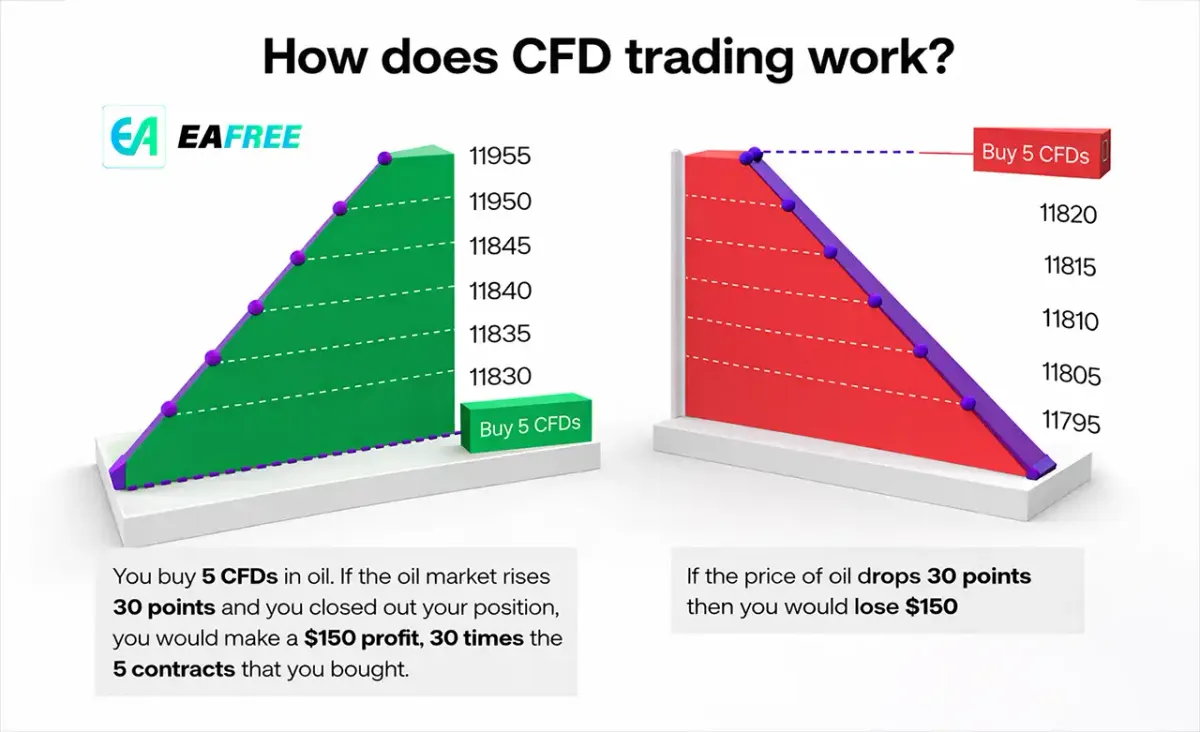
CFD stands for “Contract for Difference.” It is a financial derivative that allows traders to speculate on the price movement of an asset without actually owning the underlying asset.
Instead of buying or selling a physical currency, stock, or commodity, you enter into a contract with a broker to exchange the difference in price between the opening and closing of a trade.
For example, if you believe the EUR/USD currency pair will rise, you can open a “buy” CFD position. If the price increases, you profit from the difference. If it falls, you incur a loss.
CFD trading is widely used in various markets, including stocks, indices, commodities and especially Forex.
What are Forex CFDs?
Forex CFDs are contracts that allow you to speculate on the price movements of currency pairs. Rather than directly exchanging currencies, you trade based on their value fluctuations.
Currency pairs such as EUR/USD, GBP/USD, and USD/JPY are among the most commonly traded Forex CFDs. These pairs represent the exchange rate between two currencies, and their prices constantly change due to economic, political and market factors.
The main advantage of Forex CFDs is that they provide access to the global currency market without the need for physical currency exchange.
How CFD Trading Works
To understand CFD trading, it’s important to grasp a few key concepts:
//Leverage
CFD trading often involves leverage, which allows you to control a large position with a relatively small amount of capital.
For instance, with 1:100 leverage, you can open a $10,000 position with just $100. While leverage amplifies potential profits, it also increases the risk of losses.
//Margin
Margin is the amount of money required to open and maintain a leveraged position. It acts as a security deposit for your trade.
//Bid and Ask Price
Every CFD has two prices:
- Bid price: The price at which you can sell
- Ask price: The price at which you can buy
The difference between these prices is called the spread, which represents the broker’s fee.
//Going Long or Short
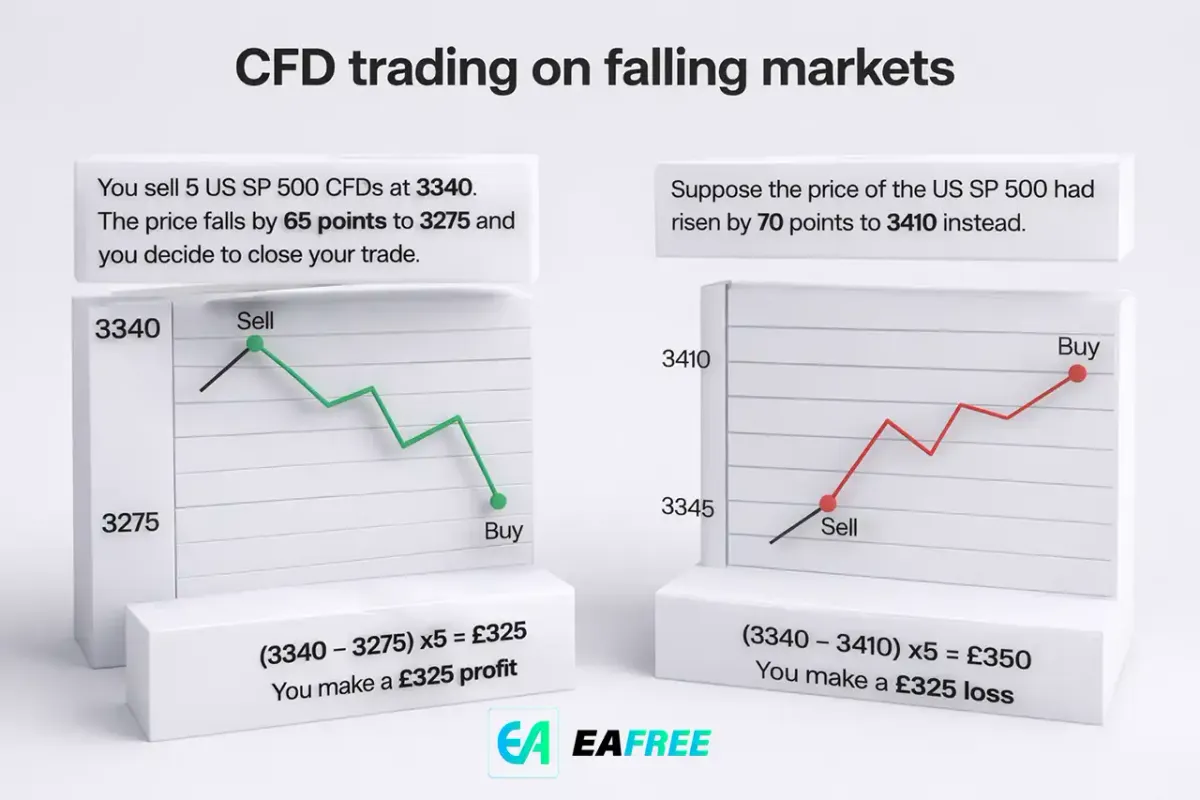
One of the biggest advantages of CFD trading is the ability to profit in both rising and falling markets:
- Going long (buy): You expect the price to increase
- Going short (sell): You expect the price to decrease
Benefits of Trading Forex CFDs
CFD trading has become popular for several reasons, especially among beginners and retail traders.
//Accessibility
You can start trading Forex CFDs with relatively low capital. Many brokers offer accounts with small minimum deposits, making it easy for beginners to enter the market.
//Flexibility
CFDs allow you to trade a wide range of currency pairs and open positions in both directions, giving you more opportunities regardless of market conditions.
//Leverage Opportunities
Leverage enables traders to maximize potential returns, even with limited funds.
//No Ownership Required
Since you don’t own the underlying asset, there’s no need to worry about storage, delivery, or other logistical issues.
//Global Market Access
The Forex market operates 24 hours a day, five days a week, allowing you to trade at your convenience.
Risks of CFD Trading
While CFD trading offers many benefits, it also comes with significant risks that beginners must understand.
//High Risk Due to Leverage
Leverage can magnify losses just as much as profits. A small unfavorable price movement can lead to substantial losses.
//Market Volatility
Forex markets can be highly volatile, especially during major economic announcements or geopolitical events.
//Overtrading
Easy access and leverage can tempt traders to open too many positions, increasing risk exposure.
//Broker Risk
Choosing an unreliable broker can lead to issues such as poor execution, hidden fees, or even fraud.
Key Forex CFD Trading Terms Beginners Should Know
Before you start trading, familiarize yourself with these essential terms:
- Pip: The smallest price movement in a currency pair
- Lot: The size of a trading position
- Spread: The difference between bid and ask price
- Stop-loss: An order to limit potential losses
- Take-profit: An order to lock in profits
- Margin call: A notification that your account balance is too low to maintain open positions
Understanding these terms will help you navigate the trading platform and manage your trades effectively.
How to Start Trading Forex CFDs
Getting started with Forex CFD trading is simpler than you might think. Here’s a step-by-step approach:
//Choose a Reliable Broker
Look for a regulated broker with a strong reputation, transparent fees, and a user-friendly trading platform.
//Open a Trading Account
Most brokers offer demo accounts, which allow you to practice trading with virtual money before risking real funds.
//Learn the Basics
Take time to understand market analysis, trading strategies, and risk management techniques.
//Develop a Trading Plan
A solid trading plan includes:
- Entry and exit rules
- Risk management strategy
- Trading goals
//Start Small
Begin with small trades to minimize risk while you gain experience.
Basic Strategies for Forex CFD Trading
Successful trading requires more than just luck. Here are some beginner-friendly strategies:
//Trend Following
This strategy involves identifying and following the direction of the market trend. If the trend is upward, you look for buying opportunities; if downward, selling opportunities.
//Breakout Trading
Traders look for key levels of support and resistance. When the price breaks through these levels, it often continues in that direction.
//Range Trading
In a sideways market, traders buy at support levels and sell at resistance levels.
//Scalping
This involves making multiple small trades to capture minor price movements. It requires quick decision-making and discipline.
Risk Management Tips for Beginners
Managing risk is crucial in CFD trading. Without proper risk control, even a few bad trades can wipe out your account.
//Use Stop-Loss Orders
Always set a stop-loss to limit potential losses on each trade.
//Avoid Over-Leveraging
Use leverage cautiously. Just because you can open a large position doesn’t mean you should.
//Diversify Trades
Don’t put all your capital into a single trade or currency pair.
//Stick to Your Plan
Avoid emotional trading. Follow your strategy and don’t chase losses.
Common Mistakes to Avoid
Many beginners make similar mistakes when starting out. Being aware of them can help you avoid costly errors.
//Trading Without a Plan
Entering trades without a clear strategy often leads to inconsistent results.
//Ignoring Risk Management
Failing to use stop-loss orders or risking too much on a single trade can quickly lead to losses.
//Overtrading
More trades do not necessarily mean more profits. Quality matters more than quantity.
//Letting Emotions Take Over
Fear and greed are the biggest enemies of traders. Stay disciplined and objective.
Is Forex CFD Trading Suitable for Beginners?
Forex CFD trading can be suitable for beginners, but only if approached with the right mindset and preparation.
It’s important to understand that trading is not a get-rich-quick scheme. It requires time, effort and continuous learning. Starting with a demo account, practicing strategies, and gradually transitioning to real trading can significantly improve your chances of success.
Final Thoughts
CFD trading, particularly in the Forex market, offers an exciting opportunity to participate in global financial markets with flexibility and relatively low capital requirements. However, it also comes with risks that should not be underestimated.
By understanding how CFDs work, learning key concepts, and applying proper risk management strategies, beginners can build a strong foundation and develop their trading skills over time.