

If you are new to Forex trading, you may have heard the term FIFO and wondered what it means. FIFO is one of the most important trading rules for Forex traders, especially those using brokers regulated in the United States. Understanding this rule can help you avoid trading mistakes, manage positions correctly and stay compliant with broker regulations.
In this beginner-friendly guide, you will learn what FIFO means in Forex, how it works, its advantages and disadvantages and practical examples to help you understand it better.
What Does FIFO Mean in Forex?
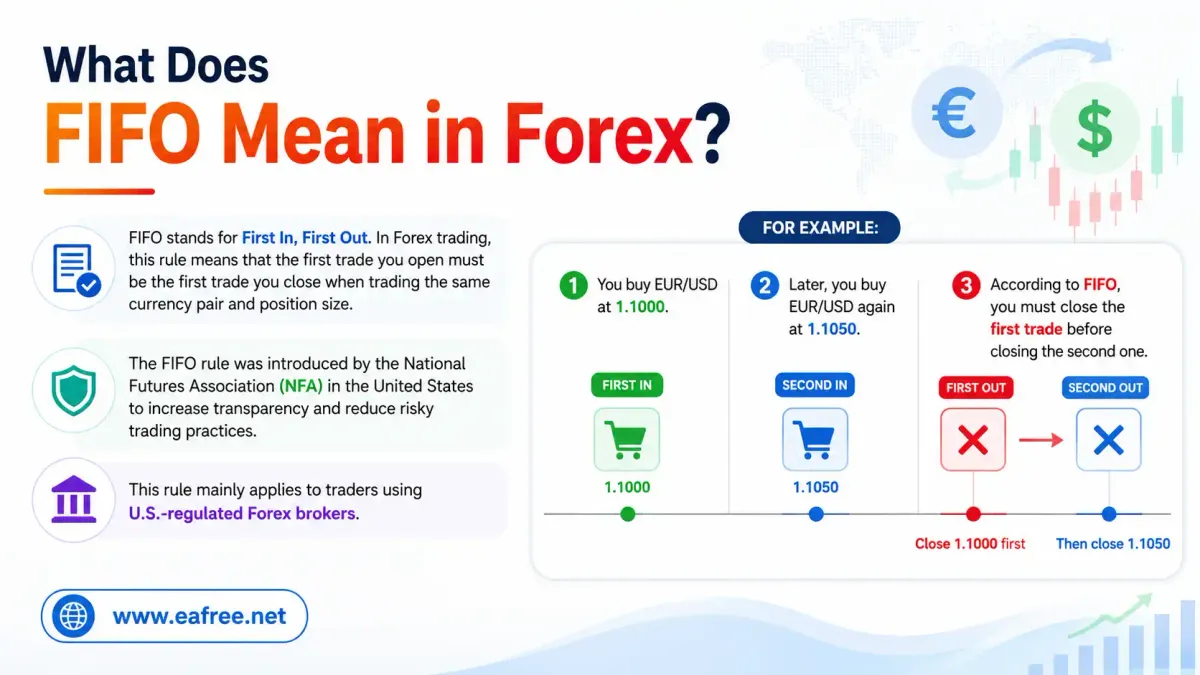
FIFO stands for First In, First Out. In Forex trading, this rule means that the first trade you open must be the first trade you close when trading the same currency pair and position size.
The FIFO rule was introduced by the National Futures Association (NFA) in the United States to increase transparency and reduce risky trading practices.
For example:
- You buy EUR/USD at 1.1000.
- Later, you buy EUR/USD again at 1.1050.
- According to FIFO, you must close the first trade before closing the second one.
This rule mainly applies to traders using U.S.-regulated Forex brokers.
Why Was the FIFO Rule Created?
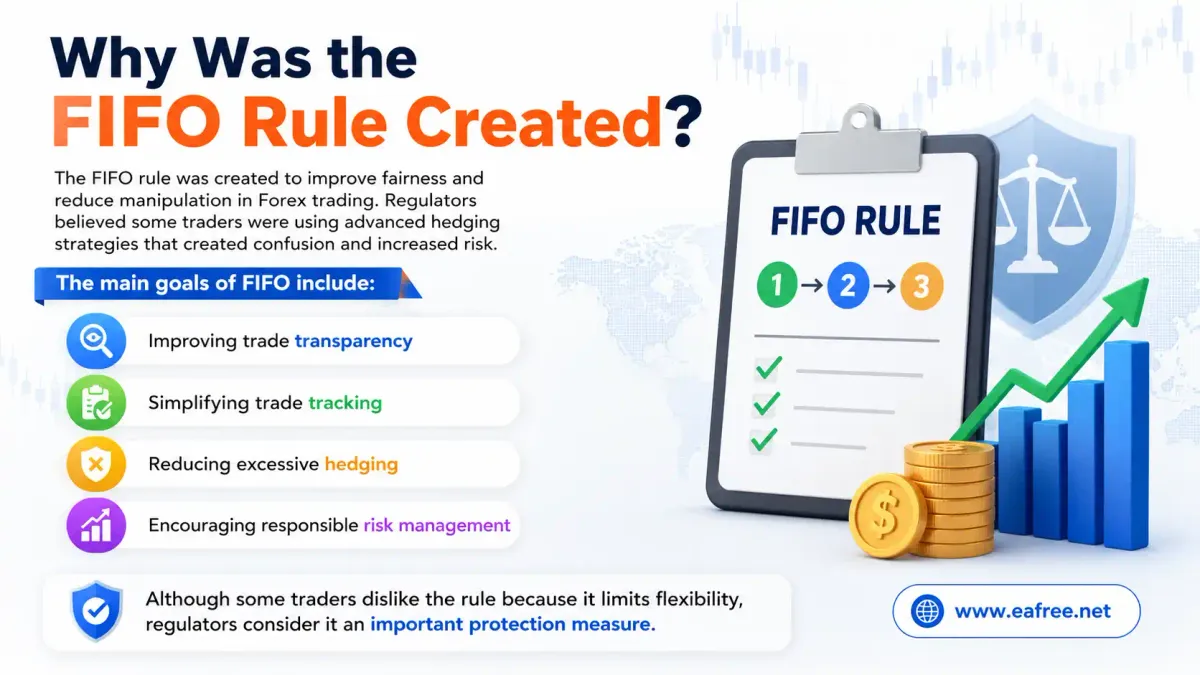
The FIFO rule was created to improve fairness and reduce manipulation in Forex trading. Regulators believed some traders were using advanced hedging strategies that created confusion and increased risk.
The main goals of FIFO include:
- Improving trade transparency.
- Simplifying trade tracking.
- Reducing excessive hedging.
- Encouraging responsible risk management.
Although some traders dislike the rule because it limits flexibility, regulators consider it an important protection measure.
How FIFO Works in Forex Trading
FIFO affects how positions are managed when multiple trades are opened on the same currency pair.
//Example of FIFO Trading
Imagine the following trades:
| Trade Number | Currency Pair | Entry Price | Lot Size |
|---|---|---|---|
| Trade 1 | EUR/USD | 1.1000 | 1 Lot |
| Trade 2 | EUR/USD | 1.1050 | 1 Lot |
| Trade 3 | EUR/USD | 1.1100 | 1 Lot |
If you want to close one trade, FIFO requires you to close:
- Trade 1 first
- Trade 2 second
- Trade 3 last
You cannot close Trade 3 before closing Trade 1.
This rule becomes especially important for traders using scalping or multiple-entry strategies.
FIFO vs Hedging in Forex
FIFO and hedging are closely related because many U.S. brokers restrict both practices.
//What is Hedging?
Hedging means opening buy and sell positions on the same currency pair simultaneously to reduce risk exposure.
Example:
- Buy EUR/USD
- Sell EUR/USD at the same time
Under NFA regulations, many brokers following FIFO rules do not allow this type of direct hedging.
//Key Differences Between FIFO and Hedging
| Feature | FIFO | Hedging |
|---|---|---|
| Purpose | Order of closing trades | Risk protection |
| Regulation | Required by U.S. brokers | Often restricted in U.S. |
| Flexibility | Lower | Higher |
| Complexity | Simple | More advanced |
Understanding both concepts helps traders choose suitable trading strategies.
Advantages of FIFO in Forex
Although FIFO may feel restrictive, it offers several benefits for beginner traders.
- Better Risk Management: FIFO encourages traders to manage positions systematically instead of randomly closing trades.
- Increased Transparency: Trade history becomes easier to understand and monitor.
- Simpler Accounting: FIFO simplifies profit and loss calculations for brokers and traders.
- Reduced Emotional Trading: Since traders must follow a structured order, impulsive decisions become less common.
Disadvantages of FIFO in Forex
Despite its advantages, FIFO also has limitations.
- Reduced Trading Flexibility: Traders cannot freely close the most profitable positions first.
- Difficult for Scalpers: Scalping strategies often involve multiple quick entries and exits, which FIFO can complicate.
- Limits Advanced Strategies: Some advanced trading methods depend on flexible position management and hedging.
- Can Affect Profit Optimization: Traders may miss opportunities to maximize profits because of forced trade order rules.
Who Needs to Follow FIFO Rules?
FIFO mainly applies to traders using brokers regulated in the United States.
//Traders Most Affected by FIFO
- U.S.-based Forex traders
- Traders using NFA-regulated brokers
- Scalpers and day traders
- Traders using Expert Advisors (EAs)
International brokers outside the U.S. may not enforce FIFO rules, allowing more flexibility.
However, traders should always check broker regulations before opening an account.
Tips for Trading Successfully with FIFO
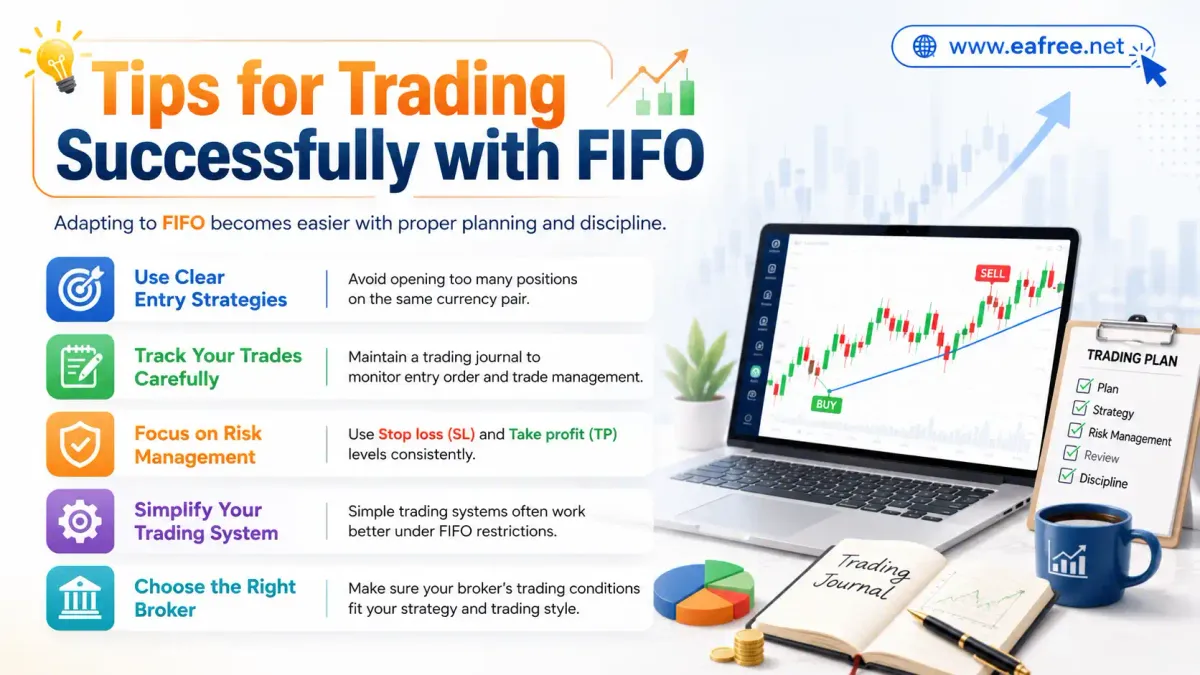
Adapting to FIFO becomes easier with proper planning and discipline.
- Use Clear Entry Strategies: Avoid opening too many positions on the same currency pair.
- Track Your Trades Carefully: Maintain a trading journal to monitor entry order and trade management.
- Focus on Risk Management: Use Stop loss (SL) and Take profit (TP) levels consistently.
- Simplify Your Trading System: Simple trading systems often work better under FIFO restrictions.
- Choose the Right Broker: Make sure your broker’s trading conditions fit your strategy and trading style.
Common FIFO Mistakes Beginners Make
New traders often misunderstand how FIFO works.
Here are some common mistakes:
| Mistake | Explanation |
|---|---|
| Closing newer trades first | Violates FIFO rules |
| Opening too many similar positions | Makes management difficult |
| Ignoring broker regulations | Can lead to rejected trades |
| Using incompatible EAs | Some automated systems may fail under FIFO |
Avoiding these mistakes can improve your overall trading experience.
Is FIFO Good or Bad for Forex Traders?
FIFO is neither completely good nor bad. It depends on your trading style.
For beginners, FIFO can encourage discipline and proper trade management. For advanced traders, however, it may feel restrictive because it limits flexibility and hedging opportunities.
If you plan to trade with U.S.-regulated brokers, learning FIFO is essential for long-term success.
Conclusion
FIFO in Forex stands for First In, First Out, meaning the oldest trade must be closed before newer trades on the same currency pair. The rule was introduced to improve transparency and reduce risky trading behavior.
While FIFO can limit flexibility for advanced traders, it also helps beginners develop structured trading habits and better risk management skills.
Before choosing a Forex broker or trading strategy, make sure you fully understand how FIFO rules may affect your trades.
FAQs
❓ What does FIFO stand for in Forex?
FIFO stands for First In, First Out, meaning the oldest trade must be closed first.
❓ Is FIFO mandatory for all Forex brokers?
No. FIFO is mainly required by U.S.-regulated Forex brokers.
❓ Can I hedge while following FIFO rules?
Most U.S. brokers that apply FIFO also restrict direct hedging.
❓ Does FIFO affect scalping strategies?
Yes. FIFO can make scalping more difficult because traders cannot freely close positions.
❓ How can beginners adapt to FIFO trading?
Beginners can adapt by using simple strategies, strong risk management, and careful trade tracking.