
Introduction
Price action trading is one of the most popular and effective approaches in financial markets today. Unlike indicator-heavy strategies, price action focuses purely on the movement of price itself—giving traders a clearer, more direct understanding of market behavior.
Whether you're trading forex, stocks, or crypto, mastering price action can help you make more informed decisions, reduce noise, and build a consistent trading strategy. In this comprehensive beginner’s guide, you’ll learn what price action trading is, how it works, key concepts and practical strategies to get started.
What Is Price Action Trading?
Price action trading is a method of analyzing and trading financial markets based on historical price movements. Instead of relying on complex indicators, traders study charts, patterns and candlesticks to predict future price behavior.
At its core, price action reflects the collective psychology of market participants. Every price movement is a result of supply and demand, driven by buyers and sellers reacting to news, emotions and expectations.
//Key Characteristics:
- Focus on raw price data
- Minimal use of indicators
- Emphasis on chart patterns and candlesticks
- Applicable across all markets and timeframes
Why Choose Price Action Trading?
There are several reasons why beginners and professionals alike prefer price action trading:
//1. Simplicity
Price action removes unnecessary complexity. You don’t need dozens of indicators cluttering your chart—just clean price data.
//2. Versatility
It works in all markets: forex, stocks, commodities, and cryptocurrencies.
//3. Real-Time Insights
Unlike lagging indicators, price action provides immediate information about market sentiment.
//4. Better Decision-Making
By understanding price behavior, traders can make more logical and confident decisions.
Understanding Market Structure
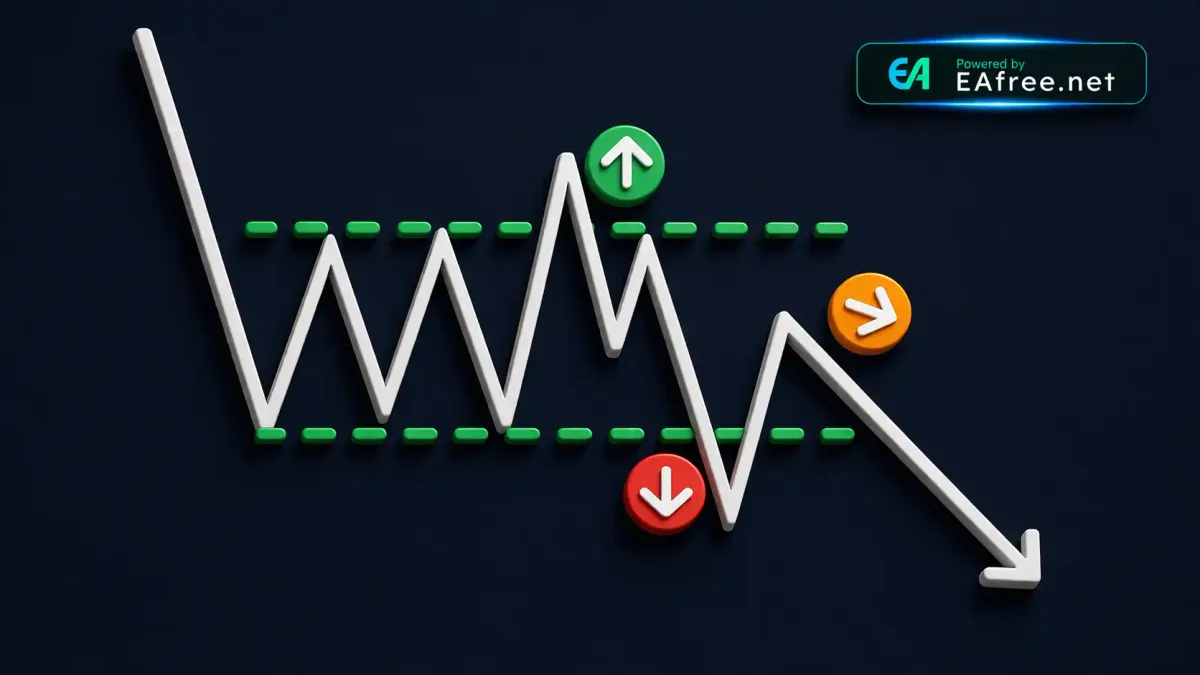
Before diving into strategies, it's essential to understand market structure—the foundation of price action trading.
//Trend Types:
- Uptrend: Higher highs and higher lows
- Downtrend: Lower highs and lower lows
- Sideways (Range): Price moves within a horizontal range
Recognizing these patterns helps traders align with the market direction rather than trading against it.
Key Price Action Concepts
//1. Support and Resistance
Support and resistance are critical levels where price tends to react.
- Support: A level where price tends to stop falling
- Resistance: A level where price tends to stop rising
These levels act as psychological barriers and are essential for identifying entry and exit points.
//2. Candlestick Patterns
Candlestick patterns provide valuable insights into market sentiment.
Common patterns include:
- Pin bar (rejection)
- Engulfing pattern (momentum shift)
- Doji (indecision)
Each pattern tells a story about the battle between buyers and sellers.
//3. Breakouts and Fakeouts
- Breakout: When price moves beyond a key level with strong momentum
- Fakeout: When price briefly breaks a level but quickly reverses
Understanding the difference helps avoid false signals and traps.
//4. Trendlines
Trendlines help visualize the direction of the market.
- Uptrend line: Connects higher lows
- Downtrend line: Connects lower highs
They act as dynamic support and resistance levels.
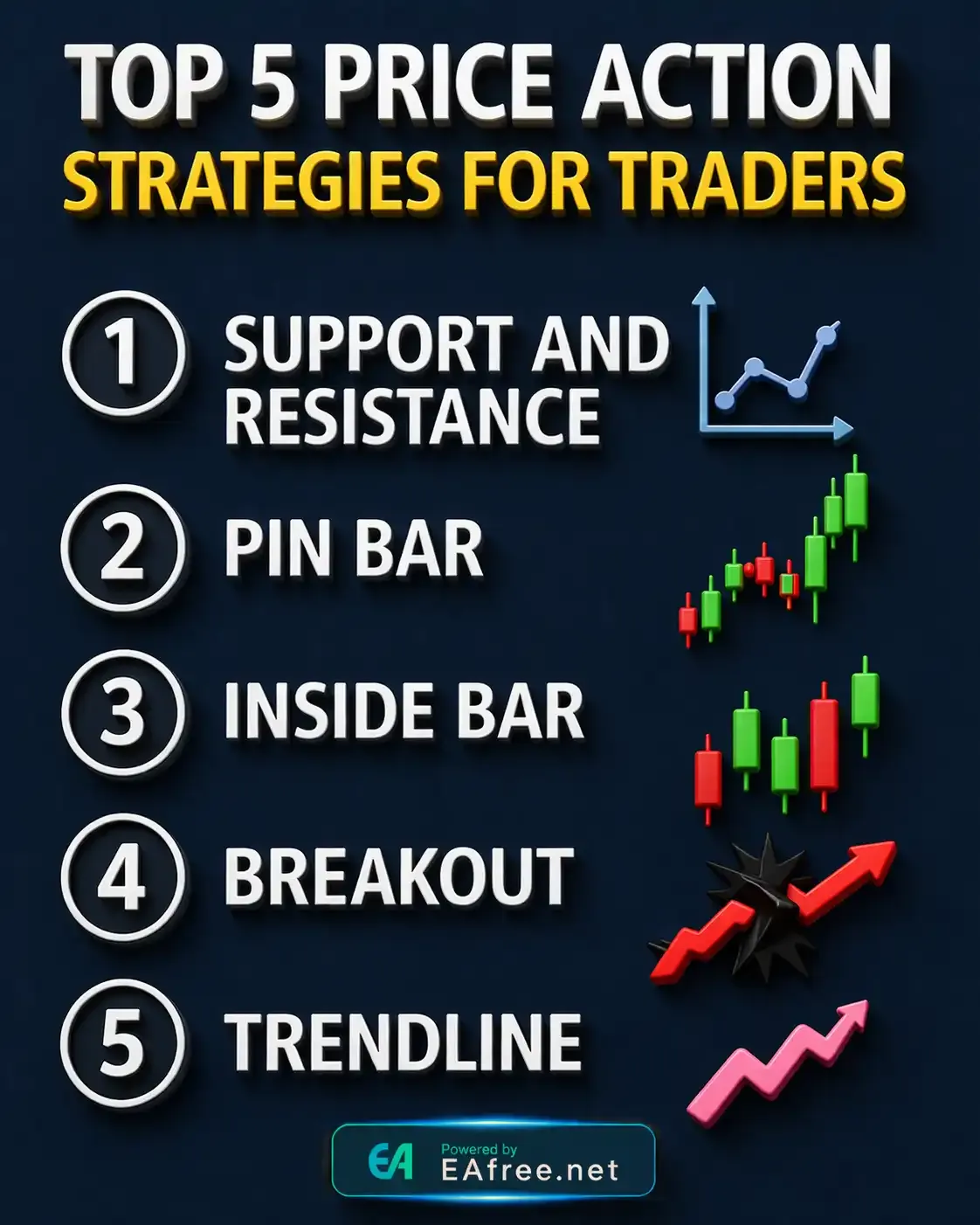
Popular Price Action Strategies
//1. Pin Bar Strategy
A pin bar has a long wick and a small body, indicating rejection of a price level.
How to trade:
- Identify key support/resistance
- Wait for a pin bar at that level
- Enter in the direction of rejection
//2. Breakout Strategy
Breakouts occur when price moves beyond consolidation zones.
Steps:
- Identify a range
- Wait for a strong breakout candle
- Enter with momentum
//3. Trend Following Strategy
Trading with the trend is one of the safest approaches.
How it works:
- Identify the trend direction
- Enter on pullbacks
- Use support/resistance as entry zones
//4. Inside Bar Strategy
An inside bar forms when a candle is completely within the range of the previous candle.
It signals consolidation before a potential breakout.
Risk Management in Price Action Trading
No trading strategy is complete without proper risk management.
//Key Principles:
- Never risk more than 1–2% per trade
- Always use stop-loss orders
- Maintain a risk-reward ratio of at least 1:2
- Avoid overtrading
Successful traders focus more on protecting capital than chasing profits.
Common Mistakes Beginners Make
//1. Overcomplicating Charts
Adding too many indicators defeats the purpose of price action.
//2. Ignoring Market Context
Patterns alone are not enough—you must consider the overall trend.
//3. Trading Without a Plan
Every trade should have a clear entry, stop-loss, and take-profit.
//4. Emotional Trading
Fear and greed often lead to poor decisions.
Tools for Price Action Traders
Even though price action is minimalistic, some tools can enhance your analysis:
- Clean candlestick charts
- Horizontal lines (support/resistance)
- Trendlines
- Volume (optional)
Avoid clutter—clarity is key.
How to Start Price Action Trading
//Step 1: Learn the Basics
Understand market structure, candlestick patterns, and key levels.
//Step 2: Practice on Demo Accounts
Test your strategies without risking real money.
//Step 3: Develop a Trading Plan
Define your rules, risk management, and goals.
//Step 4: Keep a Trading Journal
Track your trades and learn from mistakes.
//Step 5: Stay Consistent
Success comes from discipline and continuous improvement.
Advantages and Disadvantages
//Advantages:
- Simple and clean approach.
- Works across all markets.
- Improves market understanding.
//Disadvantages:
- Requires practice and experience.
- Subjective interpretation.
- No guaranteed signals.
Conclusion
Price action trading is a powerful and flexible approach that allows traders to understand the market at its core. By focusing on price movements, support and resistance, and market structure, you can develop a solid foundation for consistent trading.
While it may seem simple, mastering price action requires time, patience and discipline. Start small, practice regularly and focus on continuous learning.